
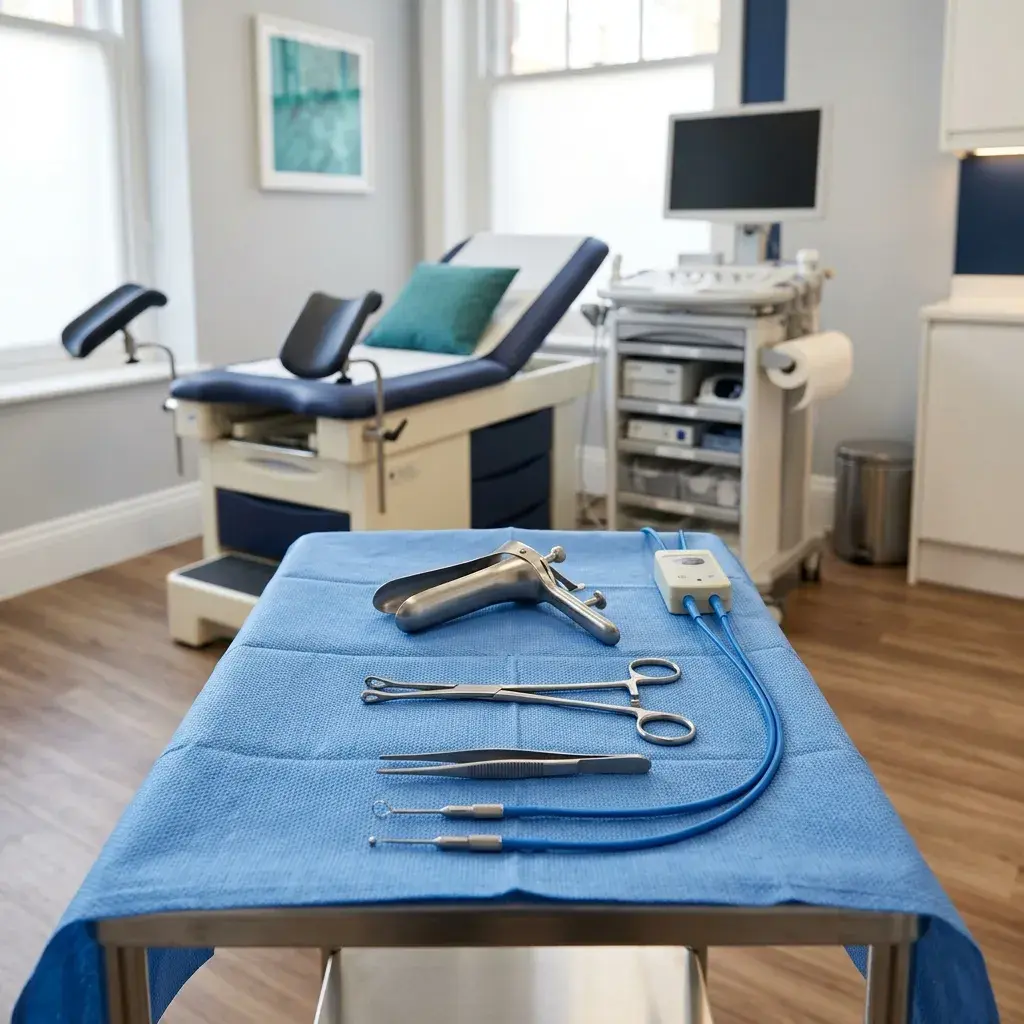
Gynecological interventions
Gynecological interventions are outpatient procedures — from curettage and hysteroscopy to electrocauterization — with same-day recovery.
Gynecological interventions — overview of outpatient procedures
Gynecological interventions are minor surgical procedures typically performed in outpatient settings. Some interventions serve both diagnostic and therapeutic purposes, and all feature rapid recovery — patients leave the office the same day after a brief rest period.
Types of gynecological interventions
- Curettage — diagnostic-therapeutic procedure for cleaning the uterine cavity
- Hysteroscopy — visual examination of the uterine cavity with a camera and potential therapeutic intervention
- Polypectomy — removal of cervical or uterine polyps
- Electrocauterization — removal of condylomas and benign changes using heat
- Cryotherapy — removal of lesions by freezing
- Bartholin's gland incision — drainage of Bartholin's gland abscess or cyst
- Conization — diagnostic-therapeutic removal of a cone of cervical tissue
- LEEP/LLETZ — electrosurgical removal of pathological cervical tissue
Advantages of outpatient gynecological interventions
- Fast recovery — patient goes home the same day
- Local anesthesia — no general anesthesia risks for most procedures
- Minimal invasiveness — small or no skin incisions
- Precise diagnostics — direct visualization and biopsy
- Combined approach — diagnosis and treatment in one procedure
Preparing for an outpatient intervention
For most outpatient gynecological interventions, basic laboratory tests (blood count, coagulation), gynecological examination with PAP test, and ultrasound diagnostics are needed. The doctor provides precise preparation instructions depending on the type of intervention.
After the intervention
Most gynecological interventions allow return to daily activities within 1–3 days. A follow-up appointment is scheduled 7–14 days after the procedure to check results and healing.

Written by
Dr Đorđe Petković
Consultant in Operative & Endoscopic Gynaecology · 17+ years of experience
Patients often ask
Yes, outpatient gynecological interventions are safe, routine procedures performed daily under controlled conditions by an experienced gynecologist.
Most outpatient interventions use local anesthesia. For some procedures (curettage, hysteroscopy), brief general anesthesia may be used.
Recovery is fast — for most interventions, patients return to daily activities in 1-3 days. Follow-up is at 7-14 days.
Basic laboratory tests (blood count, coagulation), gynecological exam, and ultrasound are needed. The doctor gives specific instructions for each intervention.