
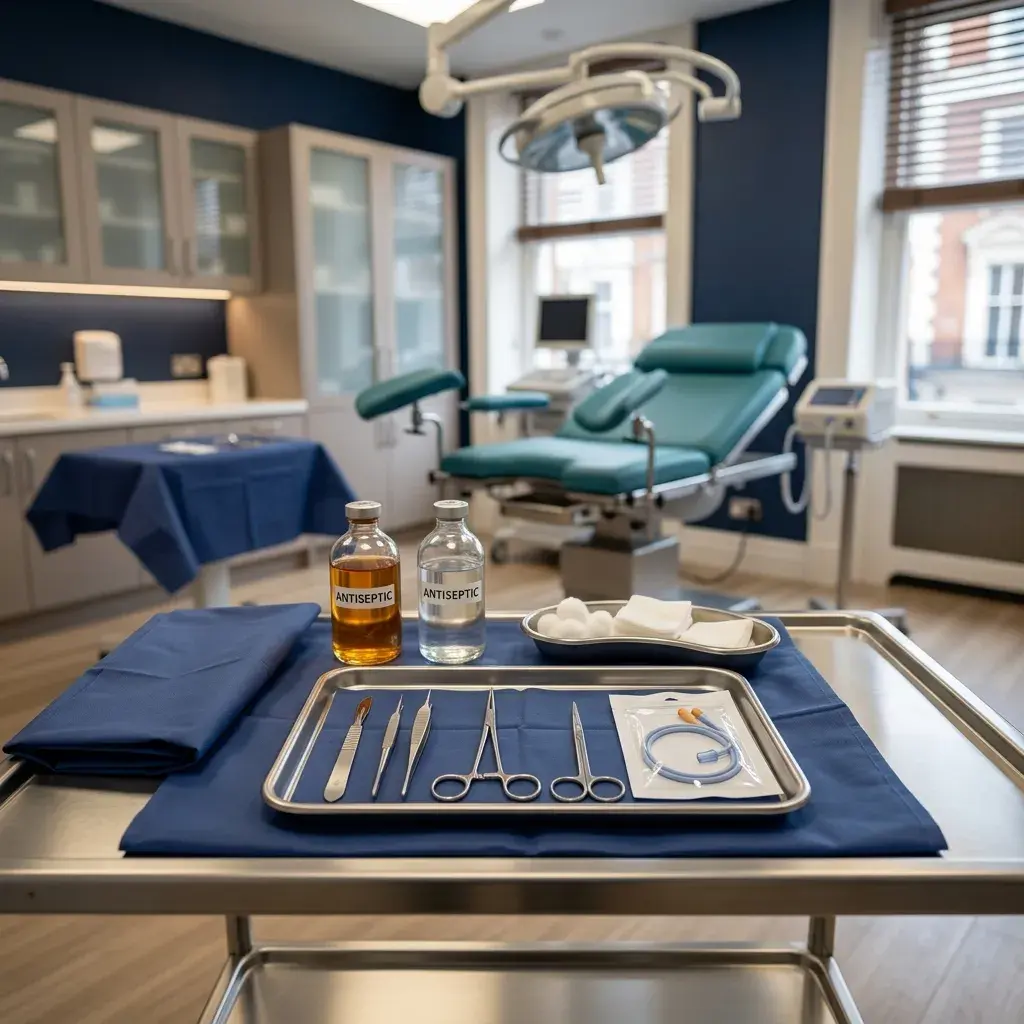
Bartholin's gland incision
Bartholin's gland incision is a surgical procedure for treating abscesses and cysts — quick drainage under local anesthesia with recovery in days.
What is Bartholin's gland incision?
Bartholin's gland incision is a surgical procedure to treat inflammation or abscess of Bartholin's gland — a paired organ located at the vaginal entrance responsible for lubrication. When the gland's duct becomes blocked, a cyst can form that may become infected and develop into a painful abscess.
When is surgical intervention needed?
- Bartholin abscess — a painful, swollen formation requiring drainage
- Recurrent Bartholin cyst — recurring cysts that do not respond to conservative treatment
- Large Bartholin cyst — a cyst causing discomfort, pain, or difficulty walking
- Acute inflammation — red, warm, and extremely painful area requiring emergency drainage
Types of surgical procedures
- Simple incision and drainage — a small cut to drain abscess contents (for minor inflammations)
- Marsupialization — creating a permanent drainage opening (prevention of recurrence)
- Word catheter — placing a small catheter for continuous drainage over 4–6 weeks
- Gland excision — complete gland removal (only in rare cases of recurrent infections)
Procedure overview
The procedure is most commonly performed under local anesthesia, though regional or brief general anesthesia may be used for more extensive procedures. The surgeon makes a small incision, drains the contents, and if needed places a catheter or creates a marsupialized cavity. The procedure takes 15–30 minutes.
Recovery and recommendations
- Sitz baths — warm baths 2–3 times daily accelerate healing
- Antibiotic therapy — prescribed based on microbiological swab results
- Follow-up examination — in 7–10 days to assess healing
- Return to activities — usually in 3–5 days after simple incision
- Avoid sexual intercourse — minimum 2–4 weeks until complete healing

Performed by
Dr Đorđe Petković
Consultant in Operative & Endoscopic Gynaecology · 17+ years of experience
Patients often ask
The procedure is performed under local anesthesia, so there is no pain during the procedure. After anesthesia wears off, mild discomfort is possible and controlled with painkillers.
Unfortunately, recurrence is possible. Marsupialization and Word catheter significantly reduce the risk of recurrence compared to simple incision.
Recovery after simple incision takes 3-5 days. Marsupialization requires a longer healing period of 1-2 weeks.
If you notice high fever, intense redness, severe pain, or increased bleeding after the procedure — seek immediate care.