Treatment of sterility
Infertility treatment — from hormonal therapy to IVF. Individual approach for each couple in a modern gynecology practice.
Infertility treatment methods
The choice of infertility treatment depends on the cause of infertility, partners' age, duration of infertility, and many other factors. Modern reproductive medicine offers a wide range of solutions — from conservative therapy to assisted reproduction.
Conservative treatment
- Hormonal ovulation stimulation — letrozole (aromatase inhibitor) as the first-line therapy for anovulatory infertility, including PCOS (per ESHRE/ASRM 2023 guidelines); clomiphene citrate as a second-line alternative; gonadotropins for resistant cases
- Hormonal imbalance correction — treating thyroid disorders, hyperprolactinemia
- Metformin for PCOS — improves insulin sensitivity and ovulation
- Antibiotic therapy — treating infections that may cause infertility
- Lifestyle changes — weight management, smoking cessation, stress reduction
Surgical treatment
- Laparoscopy — resolving adhesions, endometriosis, ovarian cysts
- Hysteroscopy — removing polyps, fibroids, septum, intrauterine adhesions
- Tubal surgery — reconstruction of damaged fallopian tubes
- Varicocelectomy — surgical treatment of varicocele in men
Assisted reproduction (ART)
- Intrauterine insemination (IUI) — placing processed sperm directly into the uterus
- In vitro fertilization (IVF) — fertilizing egg outside the body and embryo transfer
- ICSI — direct injection of a single sperm into the egg cell
- Egg donation — for women with diminished ovarian reserve
- Embryo freezing — cryopreservation for future attempts
When to seek help?
Consult a specialist if you've been actively trying to conceive for more than 12 months (or 6 months if over 35). Early evaluation and timely treatment significantly increase your chances of success.
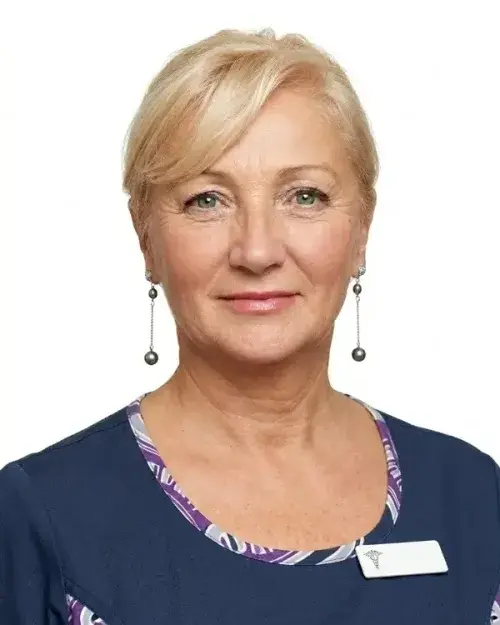
Written by
Dr Slobodanka Petković
Specialist in Gynaecology & Obstetrics · 35+ years of experience
Patients often ask
Consultation is recommended after 12 months of active trying (or 6 months for women over 35).
No, many couples conceive with conservative therapy or insemination. IVF is the last line but also the most effective method.
Hormonal panel, ultrasound, spermiogram for the partner, and if needed hysterosalpingography or laparoscopy.