
Laparoscopy
Laparoscopy is a minimally invasive surgical technique enabling precise diagnosis and operative treatment through small incisions — faster recovery, less pain, and better cosmetic results.
What is laparoscopy?
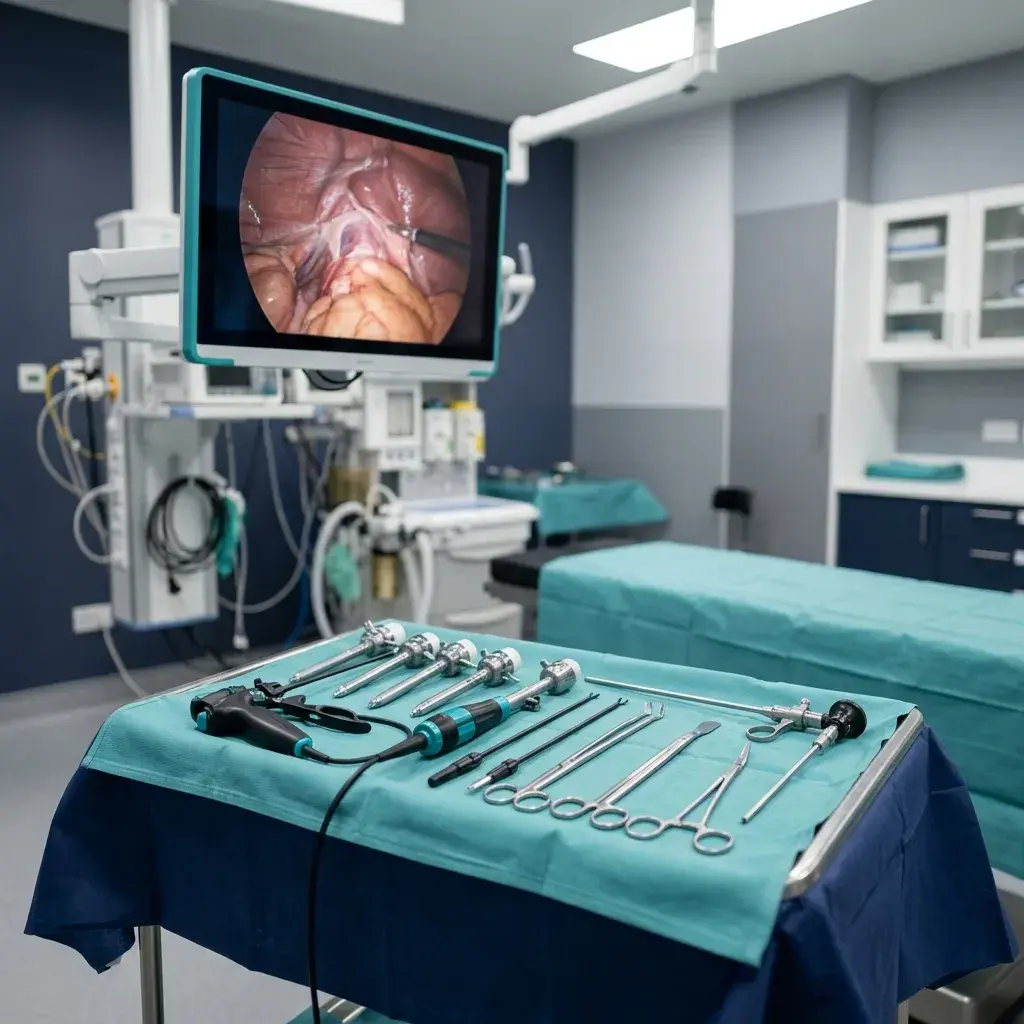
Laparoscopy is a modern minimally invasive surgical technique used in gynecology for both diagnostic and operative purposes. It is also called "keyhole surgery" because it is performed through several small incisions (5–10 mm) on the abdomen instead of one large cut.
During the procedure, the surgeon introduces a thin camera (laparoscope) and specialized instruments through small openings, providing precise visualization of internal organs on a high-resolution monitor.
Indications for laparoscopy
- Diagnosis and treatment of endometriosis — the gold standard in diagnosis
- Ovarian cyst removal — cystectomy preserving healthy ovarian tissue
- Myomectomy — laparoscopic removal of uterine fibroids
- Ectopic pregnancy — emergency laparoscopic intervention
- Adhesiolysis — releasing pelvic adhesions
- Hysterectomy — laparoscopically assisted uterine surgery
- Fertility investigation — fallopian tube patency testing (chromopertubation)
- Tubal ligation — surgical sterilization
Advantages of laparoscopy over traditional surgery
- Minimal incisions — 3–4 openings of 5–10 mm instead of a large abdominal cut
- Faster recovery — patients can walk the same or next day
- Less postoperative pain — significantly reduced need for painkillers
- Lower infection risk — minimal tissue exposure
- Better cosmetic outcome — barely visible scars
- Shorter hospital stay — typically 24–48 hours
How to prepare for laparoscopy?
Before laparoscopy, a complete set of laboratory tests (blood count, coagulation, biochemistry), ECG, and an anesthesiology consultation are required. Patients must not eat or drink 8 hours before the procedure. It is essential to inform the surgeon about all medications you take, especially anticoagulants.
The laparoscopic procedure
The procedure is performed under general anesthesia. First, CO₂ gas is introduced into the abdominal cavity to create operating space. Then, a camera is inserted through a small incision at the navel, and surgical instruments through additional incisions. The entire procedure is monitored on a high-resolution screen. Upon completion, the gas is released and small incisions are closed with one or two stitches.
Recovery after laparoscopy
Most patients recover significantly faster than after traditional surgery. Walking is possible the same day, and return to daily activities usually takes 7–14 days. It is normal to feel mild shoulder pain from residual CO₂ gas — this resolves spontaneously in 1–2 days. A follow-up appointment is scheduled 7–10 days after the procedure.
Read also:
Endometriosis: hidden symptoms →
Performed by
Dr Đorđe Petković
Consultant in Operative & Endoscopic Gynaecology · 17+ years of experience
Patients often ask
The procedure is performed under general anesthesia, so there is no pain during surgery. After the operation, mild pain around incisions and shoulders may occur but resolves in 1-2 days.
Recovery is significantly shorter than with traditional surgery — most patients return to daily activities within 7-14 days.
Incisions are 5-10 mm in size and become barely visible after healing. The cosmetic result is far better than traditional surgery.
Depending on complexity, the procedure takes from 30 minutes for diagnostic to 2-3 hours for complex operative procedures.
Most laparoscopic procedures require a short stay of 24-48 hours. Some diagnostic procedures can be performed on an outpatient basis.
For office work, usually 7-10 days; for physically demanding work, 2-3 weeks after the procedure.
Related Services
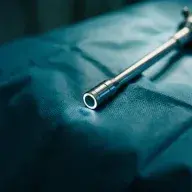
Hysteroscopy
Minimally invasive procedure to diagnose and treat the inside of the uterus.
Operative Gynaecology
Complex gynaecological procedures — hysterectomy, myomectomy and more.
Endometriosis
Diagnosis and treatment of endometriosis — ultrasound, laparoscopy, hormonal therapy.