Dermoid Cyst (Teratoma)
Diagnosis and laparoscopic removal of ovarian dermoid cysts (teratomas) — EndoBag technique, fertility preservation, fast recovery.
What Is a Dermoid Cyst?
A dermoid cyst (mature cystic teratoma) is the most common benign ovarian tumour originating from germ cells. It may contain various tissues — hair, teeth, skin, fatty tissue, and even fragments of cartilage or bone. Dermoid cysts account for 10–25% of all ovarian tumours and most commonly affect women of reproductive age (20–40 years).
Symptoms and Diagnostics
- Asymptomatic finding — most dermoid cysts are discovered incidentally during routine ultrasound examination
- Lower abdominal pain — occurs when the cyst reaches a larger size (over 5–6 cm)
- Ovarian torsion — an acute complication; dermoid cysts are the most common cause of ovarian torsion
- Pressure on the bladder or bowel — with large cysts
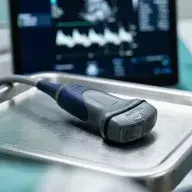
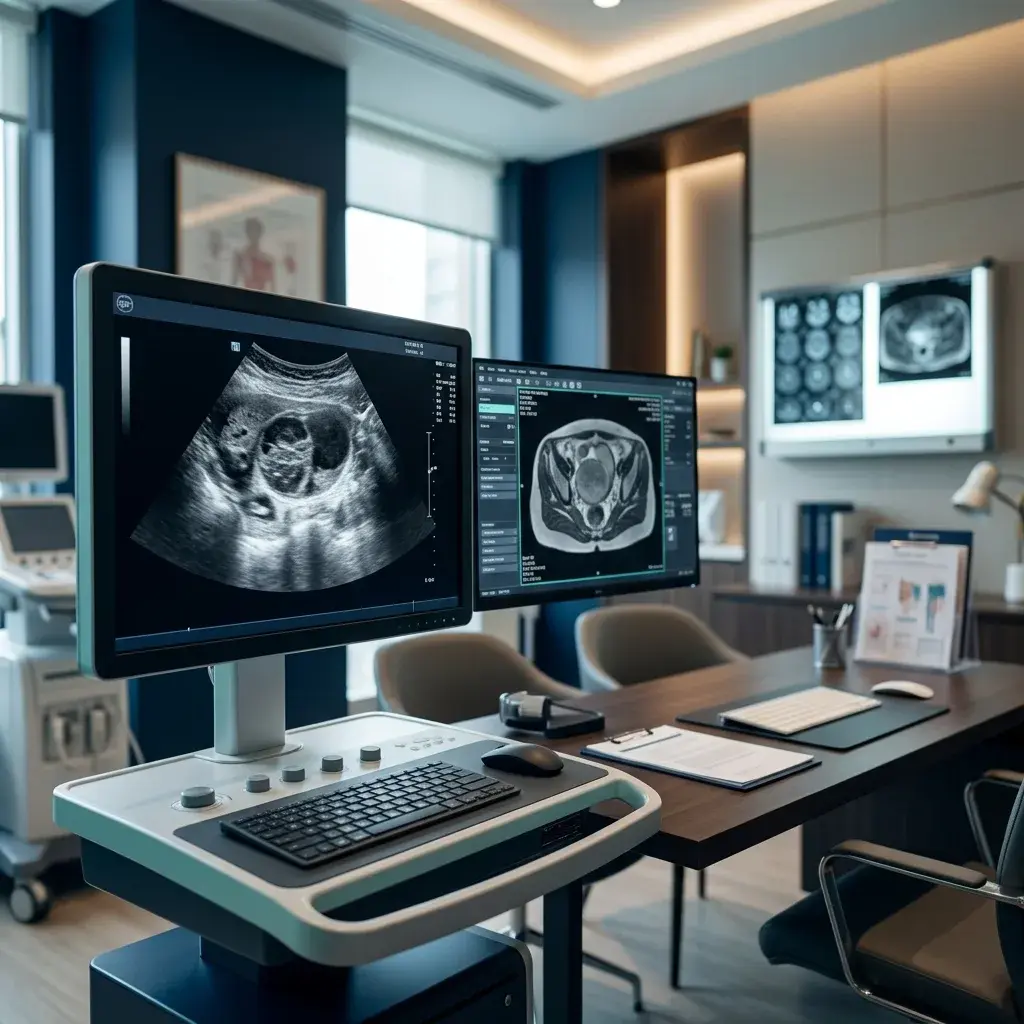
Ultrasound is the first-line diagnostic tool — dermoid cysts have a characteristic "mixed" echogenic appearance. MRI (magnetic resonance imaging) is the gold standard for definitive diagnosis, particularly for distinguishing benign from malignant changes. CT is not routinely recommended but can visualise calcifications (teeth, bone).
Why Is Surgery Necessary?
- Dermoid cysts do not resolve spontaneously and do not respond to hormonal therapy
- There is a risk of ovarian torsion — an emergency that can lead to loss of the ovary
- Cyst rupture (rare but serious) can cause chemical peritonitis
- In a small percentage of cases (1–2%), malignant transformation is possible, especially in women over 45
Laparoscopic Cystectomy — Technique
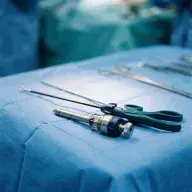
The gold standard for dermoid cyst removal is laparoscopic cystectomy — removal of the cyst while maximally preserving healthy ovarian tissue:
- The operation is performed through 3 small incisions (5–10 mm)
- The cyst is carefully dissected from healthy ovarian tissue
- It is placed in an EndoBag — a special protective pouch — before extraction
- Cyst contents must not spill into the abdominal cavity (prevention of chemical peritonitis)
- Healthy ovarian tissue is reconstructed and preserved for future ovulation
Recovery and Prognosis
Recovery after laparoscopic dermoid cyst removal is swift:
- Discharge from hospital the same or next day
- Return to daily activities within 5–7 days
- Preserved ovarian function — normal ovulation typically resumes within 2–3 cycles
- Recurrence rate is low (3–5% for unilateral, slightly higher for bilateral cysts)
Dermoid Cysts in Children and Adolescents
Dermoid cysts are the most common ovarian tumours in the paediatric population. At Palmotićeva Clinic, we have particular expertise in laparoscopic treatment of dermoid cysts in children, where ovarian tissue preservation is of paramount importance for future fertility.

Performed by
Dr Đorđe Petković
Consultant in Operative & Endoscopic Gynaecology · 17+ years of experience
Patients often ask
No. Dermoid cysts do not resolve spontaneously and do not respond to hormonal therapy. Surgical removal is the only treatment.
A dermoid cyst may contain hair, teeth, skin, fatty tissue, and even fragments of cartilage or bone — because it originates from germ cells.
In a small percentage of cases (1–2%), malignant transformation is possible, especially in women over 45. This is why surgical removal is recommended.
An EndoBag is a special protective pouch in which the cyst is placed before extraction. It prevents spillage of contents into the abdominal cavity, avoiding chemical peritonitis.
Yes. Laparoscopic cystectomy removes only the cyst while maximally preserving healthy ovarian tissue and future ovulation.
Recovery is swift — discharge the same or next day, return to activities within 5–7 days. Normal ovulation typically resumes within 2–3 cycles.