
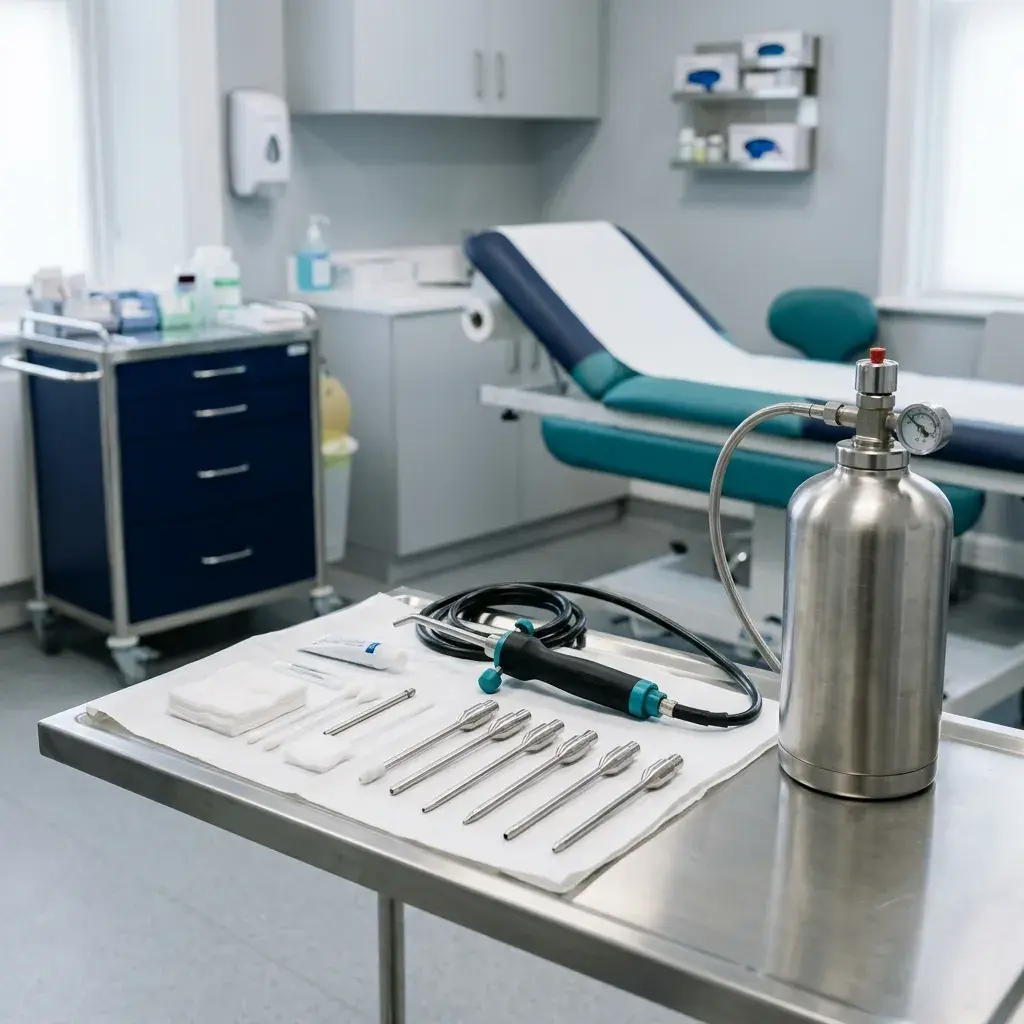
Cryotherapy
Cryotherapy is a non-invasive, painless procedure for removing condylomas, warts, and skin lesions by freezing — no anesthesia needed, in just 15 minutes.
What is cryotherapy?
Cryotherapy is an outpatient procedure that removes tissue changes using extremely low temperatures. The pathological lesion is precisely frozen, after which it dies and falls off, and new, healthy tissue regenerates in its place.
Indications for cryotherapy
- Condylomas (genital warts) — HPV-caused changes on the vulva and vagina
- Warts — viral warts on genital skin
- Keratoses — skin thickenings requiring removal
- Moles — benign skin changes removed preventively or for cosmetic reasons
- Cervical dysplasia — in certain cases of mild cervical changes
How is cryotherapy performed?
The procedure takes only 15–20 minutes and does not require anesthesia. The doctor uses a specialized cryotherapy device that applies liquid nitrogen or another cooling agent directly to the lesion. Freezing is performed in 1–2 cycles, cooling the tissue to -20°C to -40°C. The patient feels a mild sensation of cold and tingling that is completely tolerable.
Recovery after cryotherapy
- No recovery needed — the patient immediately continues daily activities
- Local reaction — mild swelling and redness at the treatment site possible
- Lesion shedding — the treated lesion dries and falls off in 7–14 days
- New tissue — healthy, regenerated tissue forms underneath
- Follow-up — in 2–3 weeks to assess results
Advantages of cryotherapy
Cryotherapy is a non-invasive, painless, and fast method without the need for suturing or anesthesia. It is ideal for treating superficial changes, with minimal risk of complications and excellent cosmetic results.
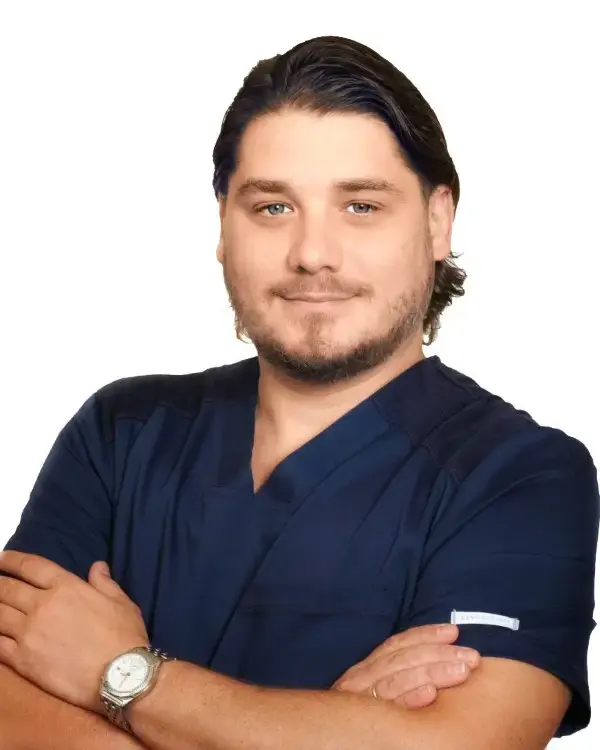
Performed by
Dr Đorđe Petković
Consultant in Operative & Endoscopic Gynaecology · 17+ years of experience
Patients often ask
Cryotherapy is generally painless. A mild stinging and cold sensation is felt during treatment, but it is completely tolerable and requires no anesthesia.
Usually one to two treatments are sufficient. For larger or more stubborn lesions, multiple sessions 2-3 weeks apart may be needed.
Cryotherapy is not recommended for deep lesions, in patients with cryoglobulinemia, or those with extreme cold sensitivity.
The frozen change dries and falls off within 7-14 days. New healthy tissue forms underneath.