
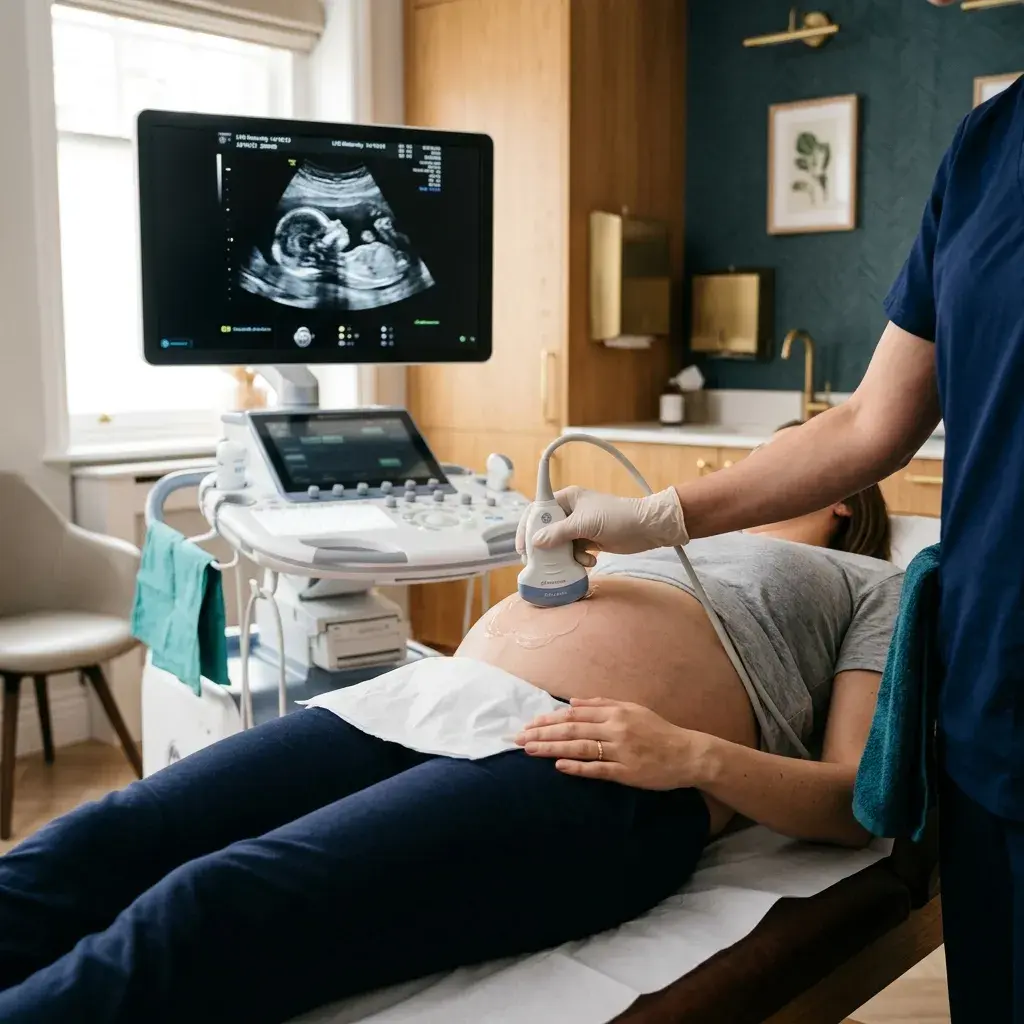
Prenatal care
Prenatal baby care — ultrasound monitoring, screening tests, and fetal vitality monitoring for a healthy and safe pregnancy.
What is prenatal baby care?
Prenatal baby care involves monitoring fetal growth, development, and health during pregnancy using modern diagnostic methods. The goal is timely detection of potential anomalies and ensuring optimal conditions for healthy baby development.
Ultrasound monitoring of baby development
- Early ultrasound (weeks 6–8) — heartbeat confirmation, gestational age determination
- Nuchal test (weeks 11–14) — nuchal translucency measurement, chromosomal anomaly risk assessment
- Anomaly scan (weeks 18–22) — detailed examination of all baby's organs and systems
- 3D/4D ultrasound — visualization of baby's face and movements in real time
- Growth scan (weeks 32–36) — monitoring weight, growth, and amniotic fluid volume
- Color Doppler — blood flow assessment through umbilical cord and placenta
Prenatal screening tests
- PRISCA I (combined screening) — ultrasound + biochemical markers at weeks 11–14
- PRISCA II (triple test) — biochemical markers at weeks 15–20
- NIPT (non-invasive prenatal test) — fetal DNA analysis from maternal blood, high accuracy for Down syndrome
- Amniocentesis — invasive chromosomal anomaly diagnosis when screening indicates elevated risk
Monitoring baby vitality in the third trimester
In the last 10–12 weeks of pregnancy, special focus is on monitoring fetal vitality: cardiotocography (CTG) records the baby's heartbeat, biophysical profile combines ultrasound and CTG, and Color Doppler monitors blood flow. Any deviation requires urgent assessment.
Importance of regular prenatal monitoring
Timely detection of potential problems enables intervention before complications arise. Regular prenatal monitoring reduces perinatal morbidity and mortality risk, ensures better outcomes for mother and baby, and gives parents peace of mind throughout pregnancy.

Written by
Dr Slobodanka Petković
Specialist in Gynaecology & Obstetrics · 35+ years of experience
Patients often ask
Minimum 3: first trimester, anomaly scan at week 20, and growth scan in the third trimester. More frequently if needed.
NIPT is a non-invasive prenatal test that analyzes fetal DNA from maternal blood. It has high accuracy for detecting Down syndrome and other chromosomal anomalies.
No, CTG is completely painless. Sensors are placed on the abdomen to record the baby's heartbeat and uterine contractions.
The optimal time for 4D ultrasound is weeks 26-32, when the baby's face is most clearly visible.