Hysteroscopy – Practical Guide
A short, practical guide for patient preparation before outpatient hysteroscopy, a no-incision procedure with same-day recovery.
Hysteroscopy is a minimally invasive gynecological procedure that allows direct examination of the inside of the uterus with the possibility of simultaneous correction of detected changes.
When is it recommended?
- Polypectomy (removal of uterine polyps)
- Removal of submucosal fibroids
- Abnormal bleeding or post-menopause
- Diagnosis of Asherman's syndrome
- Fertility investigation
- Removal of retained IUD
Preparation
Hysteroscopy is performed on an outpatient basis. No special preparation is needed. The procedure is usually planned in the first phase of the menstrual cycle (days 7–10).
The procedure
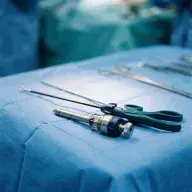
The hysteroscope (thin tube with camera) is inserted through the cervix without an incision. The uterus is gently expanded with fluid for better visualization. The entire procedure lasts 10–30 minutes. Local or general anesthesia is possible.
Benefits
- No incisions or scars
- Short recovery time
- High precision
- Outpatient procedure — you go home the same day
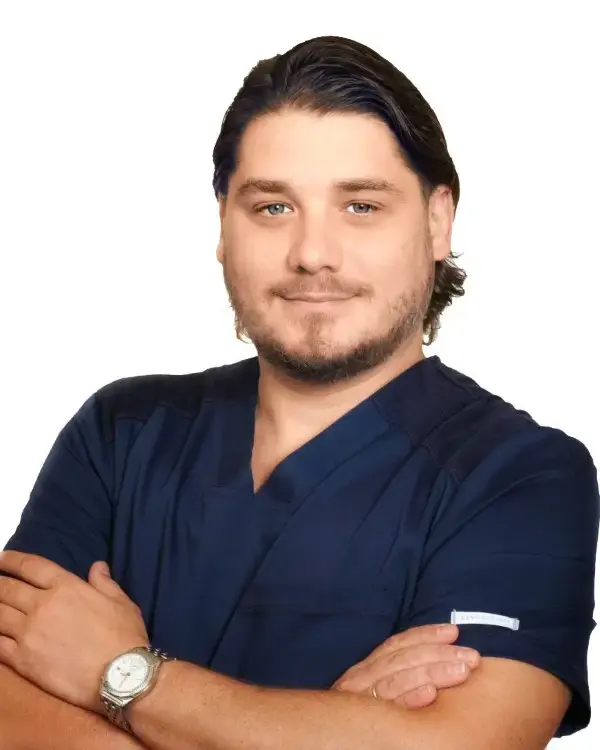
Performed by
Dr Đorđe Petković
Consultant in Operative & Endoscopic Gynaecology · 17+ years of experience
Patients often ask
Diagnostic hysteroscopy is usually performed without or with local anaesthesia and is not painful — most patients feel only mild discomfort. Operative hysteroscopy is done under brief general anaesthesia so you feel nothing during the procedure.
Recovery is quick — a diagnostic hysteroscopy requires only a few hours of rest, while after operative hysteroscopy you return to normal activities within 1–2 days. Mild bleeding or cramping may last up to 5 days.
Preparation is minimal. You should arrive on an empty stomach (6 hours without food), bring previous test results and avoid aspirin 7 days before the procedure. It is usually scheduled right after menstruation.
Yes — hysteroscopy is an outpatient procedure. You stay for a short observation period (30–60 minutes) and go home the same day. Having someone accompany you is recommended if general anaesthesia was used.
Hysteroscopy can diagnose and directly treat uterine polyps, submucosal fibroids, adhesions (Asherman syndrome), uterine anomalies and retained IUD devices — all in a single procedure.