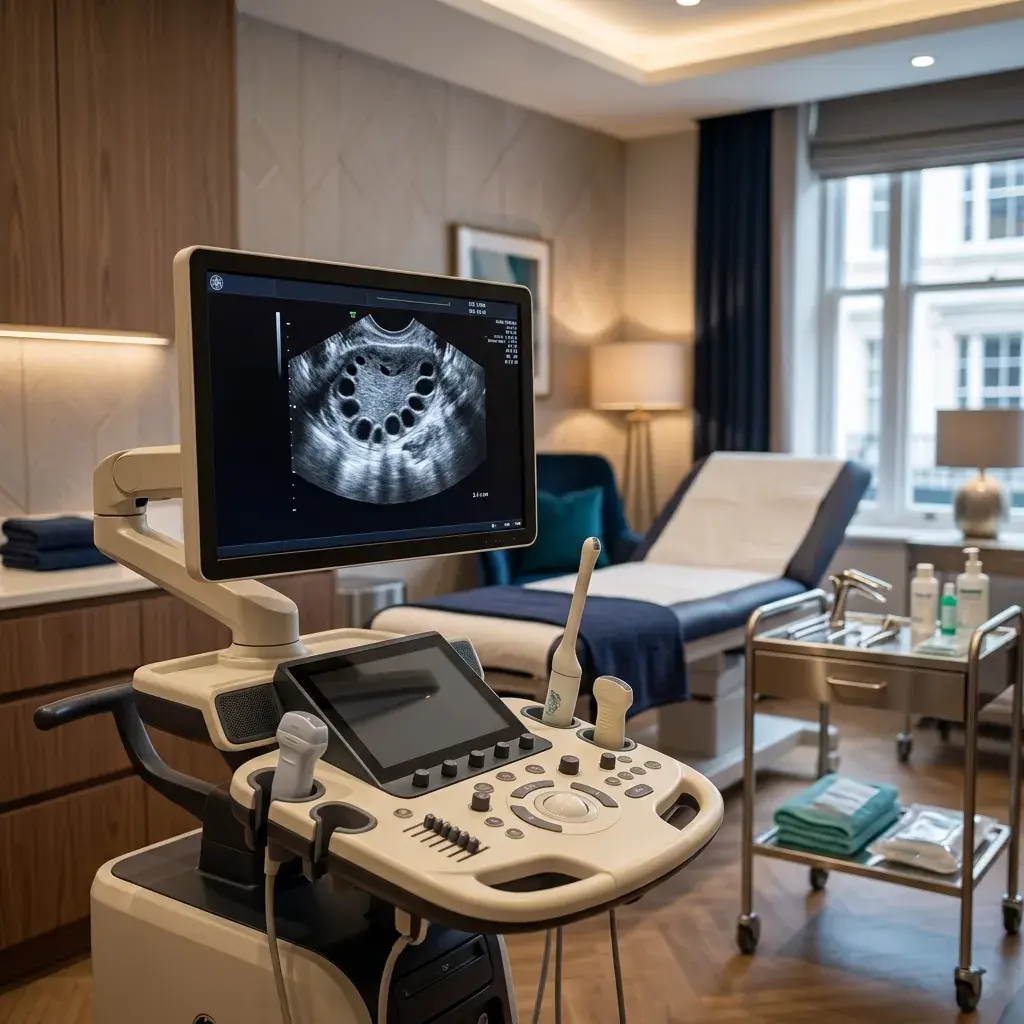
Colposcopy
Colposcopy — magnified cervical examination for early detection of changes and cancer prevention.
What is colposcopy?
Colposcopy is a diagnostic method examining the cervix, vagina, and vulva under magnification using a special instrument — the colposcope. It enables precise identification of changes invisible to the naked eye.
When is colposcopy performed?
- Abnormal PAP test — atypical cells (ASC-US, LSIL, HSIL, AGC)
- HPV positivity — high-risk types (HPV 16, 18, 31, 33, 45)
- Visual cervical changes — erosion, leukoplakia, suspicious lesions
- Post-coital bleeding — bleeding after sexual intercourse
- Post-treatment monitoring — follow-up after LEEP or conization
Colposcopy procedure
- Positioning — patient lies in gynecological position
- Speculum placement — cervical visualization
- Acetic acid application (3-5%) — marking abnormal zones (acetowhite lesions)
- Iodine test (Lugol solution) — normal tissue stains brown, pathological remains light
- Colposcopic findings — documentation of all changes per terminology system
- Biopsy — sampling suspicious areas for histopathological analysis
Colposcopic findings
- Normal finding — squamous and columnar epithelium without changes
- CIN I (LSIL) — mild dysplasia, usually monitored
- CIN II/III (HSIL) — moderate to severe dysplasia, requires intervention
- Suspicious for invasion — urgent referral for further diagnostics
Preparation and recommendations
The examination is painless, takes 10-15 minutes, and requires no special preparation. Avoiding sexual intercourse, vaginal preparations, and tampons 24-48 hours before the exam is recommended.

Performed by
Dr Đorđe Petković
Consultant in Operative & Endoscopic Gynaecology · 17+ years of experience
Patients often ask
Colposcopy is painless. Acetic acid application may cause mild stinging lasting a few seconds.
The exam takes 10-15 minutes. If a biopsy is needed, add another 5 minutes.
No, but avoiding intercourse, tampons, and vaginal preparations 24-48 hours before is recommended.