
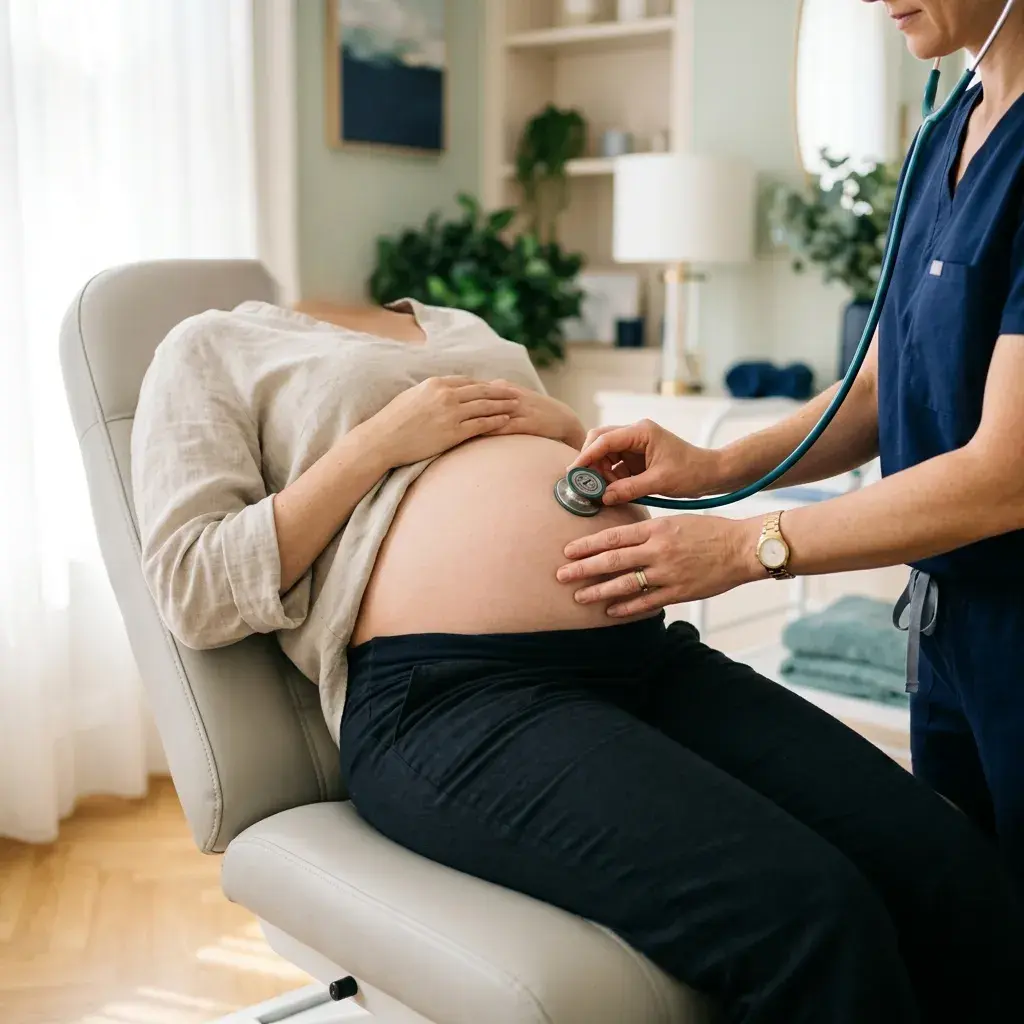
Caring for a pregnant woman
Complete pregnancy monitoring — from the first ultrasound to delivery: check-up schedule, key tests, and tips for a healthy pregnancy.
What does prenatal care involve?
Prenatal care encompasses systematic monitoring of maternal and fetal health throughout the entire pregnancy — from the first positive test to delivery. Regular check-ups, laboratory analyses, and ultrasound diagnostics enable timely detection of possible complications and optimal preparation for childbirth.
Pregnancy check-up schedule
- First trimester (weeks 1–12) — pregnancy confirmation by ultrasound, PRISCA test (combined screening), blood type, complete blood count, TORCH infections
- Second trimester (weeks 13–28) — anomaly scan (week 20), OGTT for gestational diabetes, blood pressure monitoring, baby growth assessment
- Third trimester (weeks 29–40) — CTG monitoring, baby position assessment, birth plan, check-ups every 2 weeks, and from week 36 — weekly
Key tests and examinations
- Ultrasound — monitoring baby's growth, anatomy, and position each trimester
- PRISCA / Double / Triple test — chromosomal anomaly risk assessment
- OGTT (glucose tolerance test) — gestational diabetes screening (weeks 24–28)
- TORCH panel — testing for toxoplasmosis, rubella, CMV, herpes
- Anti-D immunoglobulin — for Rh-negative mothers (week 28)
- GBS swab — Group B Streptococcus screening (weeks 35–37)
- CTG (cardiotocography) — fetal heart monitoring in the third trimester
Tips for a healthy pregnancy
- Folic acid — take 400 mcg daily before conception and during the first trimester
- Balanced diet — rich in fruits, vegetables, proteins, and iron
- Regular physical activity — walking, swimming, prenatal yoga
- Avoid alcohol and cigarettes — harmful to baby's development
- Adequate rest — 7–9 hours of sleep, relaxation techniques for stress reduction
- Hydration — minimum 2 liters of water daily
When to urgently contact your doctor?
Contact your gynecologist immediately if you notice: vaginal bleeding, severe abdominal pain, premature rupture of membranes, sudden decrease in baby movement, facial and hand swelling with headache, or temperature above 38°C.

Written by
Dr Slobodanka Petković
Specialist in Gynaecology & Obstetrics · 35+ years of experience
Patients often ask
In the first and second trimesters, usually monthly. From week 28, every 2 weeks, and from week 36 — weekly until delivery.
PRISCA screening in the first trimester, anomaly scan at week 20, OGTT test for diabetes at weeks 24-28, and GBS swab at weeks 35-37.
Yes, moderate physical activity (walking, swimming, prenatal yoga) is recommended for a healthy pregnancy. Avoid contact sports and extreme exertion.
Folic acid (400 mcg) during the first trimester, vitamin D, iron as needed, and omega-3 fatty acids. The doctor prescribes individually.