Infertility Treatment Belgrade
Infertility is defined as the inability to conceive after one year of regular unprotected intercourse. At Palmotićeva Clinic we perform complete couple fertility diagnostics — from hormonal analyses and semen analysis to folliculometry and HSG — and create an individualised treatment plan.
What is infertility?
Infertility is defined as the inability to conceive after one year of regular, unprotected sexual intercourse. For women over 35, this period is shortened to 6 months. Infertility affects approximately 15% of couples of reproductive age and may have a cause in the woman, the man, or both partners simultaneously.
Causes of female infertility
Female infertility can result from numerous factors, which may combine:
- Ovulation disorders — polycystic ovary syndrome (PCOS), hyperprolactinaemia, thyroid disorders
- Endometriosis — tissue similar to the endometrium grows outside the uterus, causing adhesions and tubal damage
- Tubal factor — blocked or damaged fallopian tubes (most commonly due to previous infections or surgical interventions)
- Uterine factor — fibroids, polyps, congenital uterine anomalies, intrauterine adhesions (Asherman syndrome)
- Diminished ovarian reserve — natural decline in egg count with age, accelerated in premature menopause
- Unexplained infertility — in 10–15% of cases, the cause remains unknown even after complete diagnostics
Causes of male infertility
A male factor is present in approximately 40–50% of infertility cases. The most common causes include:
- Reduced sperm count, motility or morphology (oligoasthenoteratozoospermia)
- Varicocele — enlarged veins in the scrotum affecting sperm quality
- Hormonal disorders — low testosterone, elevated prolactin
- Obstructive azoospermia — blocked ducts that carry sperm
- Genetic factors — Klinefelter syndrome, Y-chromosome microdeletions
Fertility diagnostics at Palmotićeva Clinic
Complete couple fertility diagnostics at our clinic includes:
- Female hormonal profile — FSH, LH, estradiol, progesterone, AMH (anti-Müllerian hormone), TSH, prolactin
- Transvaginal ultrasound — assessment of ovarian reserve (AFC), uterine and ovarian condition
- Folliculometry — serial ultrasound scans to track follicle growth and confirm ovulation
- HSG (hysterosalpingography) — X-ray examination of fallopian tube patency with contrast
- Semen analysis — evaluation of sperm count, motility and morphology
- Additional tests — genetic testing, immunological factors, laparoscopic tubal patency test
Infertility treatment methods
The treatment plan is created individually based on diagnostic results:
- Ovulation induction — medication-based ovarian stimulation (clomiphene citrate, gonadotropins)
- Intrauterine insemination (IUI) — preparation and direct placement of sperm into the uterus
- In vitro fertilisation (IVF/ICSI) — laboratory fertilisation of the egg and embryo transfer
- Surgical treatment — laparoscopy (endometriosis, cysts, adhesions), hysteroscopy (polyps, fibroids, septa)
Encouraging statistics
Two-thirds of couples treated for infertility successfully have children. Early diagnosis and treatment significantly increases chances of success, especially for women under 35. Don't wait — schedule a consultation and begin your path to parenthood.
Read more:
Fertile Days — How to Calculate Ovulation
Pregnancy — Prenatal Care
Hysteroscopy — Diagnostic and Operative
Laparoscopy — Minimally Invasive Surgery
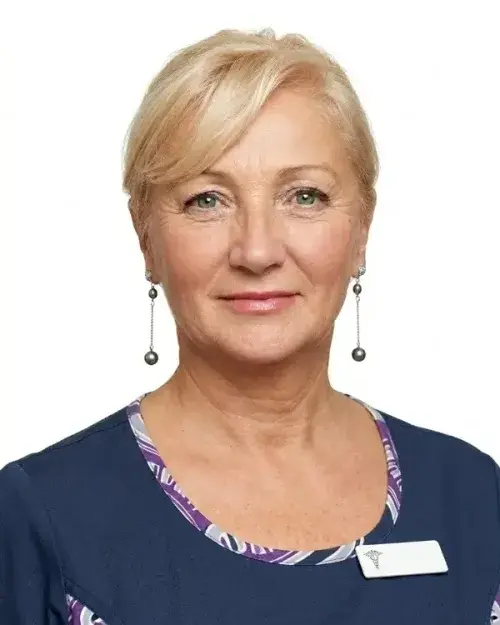
Written by
Dr Slobodanka Petković
Specialist in Gynaecology & Obstetrics · 35+ years of experience
Patients often ask
If you are under 35 and have been trying to conceive for over a year without success, or over 35 and trying for more than 6 months — it is time to consult a specialist. Earlier consultation increases chances of successful treatment.
For women: hormonal profile (FSH, LH, estradiol, progesterone, AMH), transvaginal ultrasound, folliculometry, HSG (hysterosalpingography) and laparoscopy if needed. For men: semen analysis and hormonal tests. The goal is to identify the exact cause.
The most common causes are ovulation disorders (PCOS), endometriosis, blocked fallopian tubes, uterine fibroids, diminished ovarian reserve and age. In approximately 10–15% of couples, the cause is unknown (idiopathic infertility).
Yes — two-thirds of couples treated for infertility successfully have children. Treatment options include ovulation induction, intrauterine insemination (IUI), in vitro fertilisation (IVF/ICSI) and surgical treatment (laparoscopy, hysteroscopy).
Prices for the basic fertility evaluation package (hormonal profile + ultrasound + consultation) are available on our price list. Semen analysis for your partner is performed through a referral laboratory. For an individualised treatment plan, schedule a consultation.