
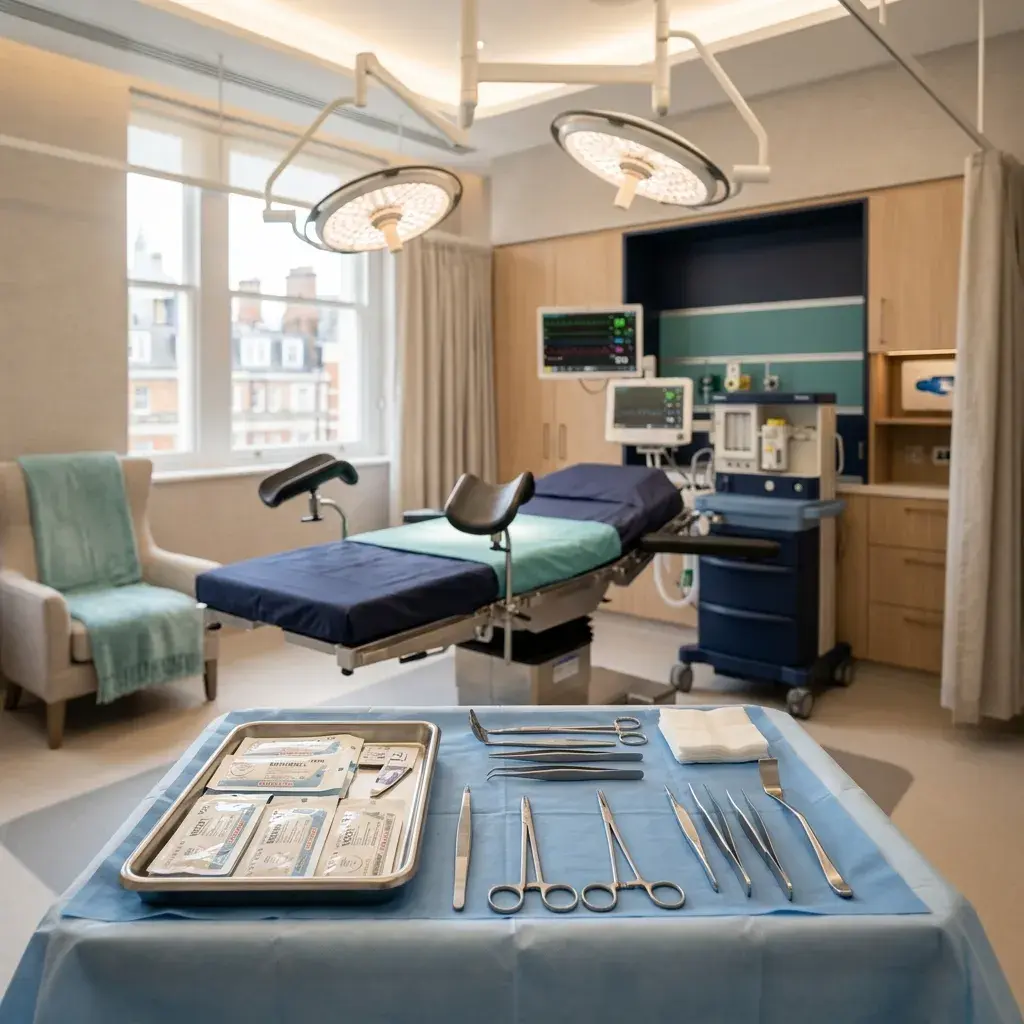
Cerclage
Cerclage is a surgical intervention to close the cervix that prevents miscarriage and preterm birth — 80–90% success rate.
What is cerclage?
Cerclage is a surgical intervention that closes the cervix with strong sutures during pregnancy. It is performed when cervical incompetence exists — a condition where the cervix opens prematurely, which without intervention can lead to miscarriage or preterm birth.
When is cerclage indicated?
- Cervical incompetence — proven shortening or opening of the cervix during pregnancy
- Medical history — previous late miscarriages (after week 16)
- Ultrasound cervical shortening — cervical length under 25 mm on transvaginal ultrasound before week 24
- Previous preterm birth — history of spontaneous preterm delivery in earlier pregnancies
- Emergency cerclage — prolapse of fetal membranes through the open cervix (urgent situation)
Types of cerclage
- Prophylactic cerclage (McDonald) — placed between weeks 12 and 14 in women with known cervical incompetence
- Therapeutic (ultrasound-indicated) — placed when ultrasound detects cervical shortening before week 24
- Emergency (rescue) cerclage — performed when fetal membranes are already visible in the cervical canal
- Transabdominal cerclage — suture placed through the abdomen; used when vaginal approach is unsuccessful
Procedure overview
Cerclage is performed in hospital under spinal or general anesthesia. The surgeon places a strong suture (usually a non-absorbable tape) around the cervix vaginally, closing it like a "purse string." The procedure takes 15–30 minutes. After the procedure, the mother is monitored in hospital for 24–48 hours.
Recovery and monitoring
- Rest for 48–72 hours after the procedure
- Sexual intercourse restriction — usually minimum 1–2 weeks, often until end of pregnancy
- Regular ultrasound monitoring — cervical length check every 2 weeks
- Antibiotic prophylaxis — infection prevention in the immediate postoperative period
- Suture removal — at weeks 36–37 to allow spontaneous delivery
Cerclage effectiveness
Cerclage significantly reduces the risk of miscarriage and preterm birth. Studies show a success rate of 80–90% when the procedure is performed timely in appropriate candidates.

Performed by
Dr Đorđe Petković
Consultant in Operative & Endoscopic Gynaecology · 17+ years of experience
Patients often ask
The procedure is performed under anesthesia, so there is no pain during the operation. Mild postoperative discomfort and cramps are possible and controlled with painkillers.
Studies show an 80-90% success rate when the procedure is performed timely in appropriate candidates.
The suture is removed at weeks 36-37 in an outpatient setting, usually without anesthesia. The procedure is brief and painless.
Generally yes, but with certain restrictions: avoiding sexual intercourse, heavy physical exertion, and prolonged standing. The doctor provides individual recommendations.