Pap Smear — Cervical Cytology Screening | Palmotićeva
The Pap smear (Papanicolaou test) is a painless cervical cytology screening for early detection of precancerous changes and cancer prevention.
What is a Pap smear?
The Pap smear (Papanicolaou test) is a painless cervical cytology screening designed for early detection of precancerous and cancerous cell changes. Named after the Greek-American pathologist Georgios Papanicolaou who developed this screening method in 1928, the Pap test remains the most important preventive examination in gynecology — thanks to it, the incidence of cervical cancer has been dramatically reduced worldwide.
Why is a Pap smear important?
Cervical cancer develops gradually — from initial cellular changes to invasive carcinoma, the process can take 10–15 years. The Pap test detects these changes at their earliest stage, when treatment is straightforward and fully curable.
- Early detection of dysplasia — precancerous changes that can be completely cured
- Cervical cancer prevention — up to 80% reduction in incidence with regular screening
- HPV infection detection — cellular changes caused by human papillomavirus
- Infection monitoring — vaginitis, cervicitis, fungal and bacterial infections
- Post-treatment follow-up — monitoring after conization or dysplasia treatment
How is a Pap smear performed?
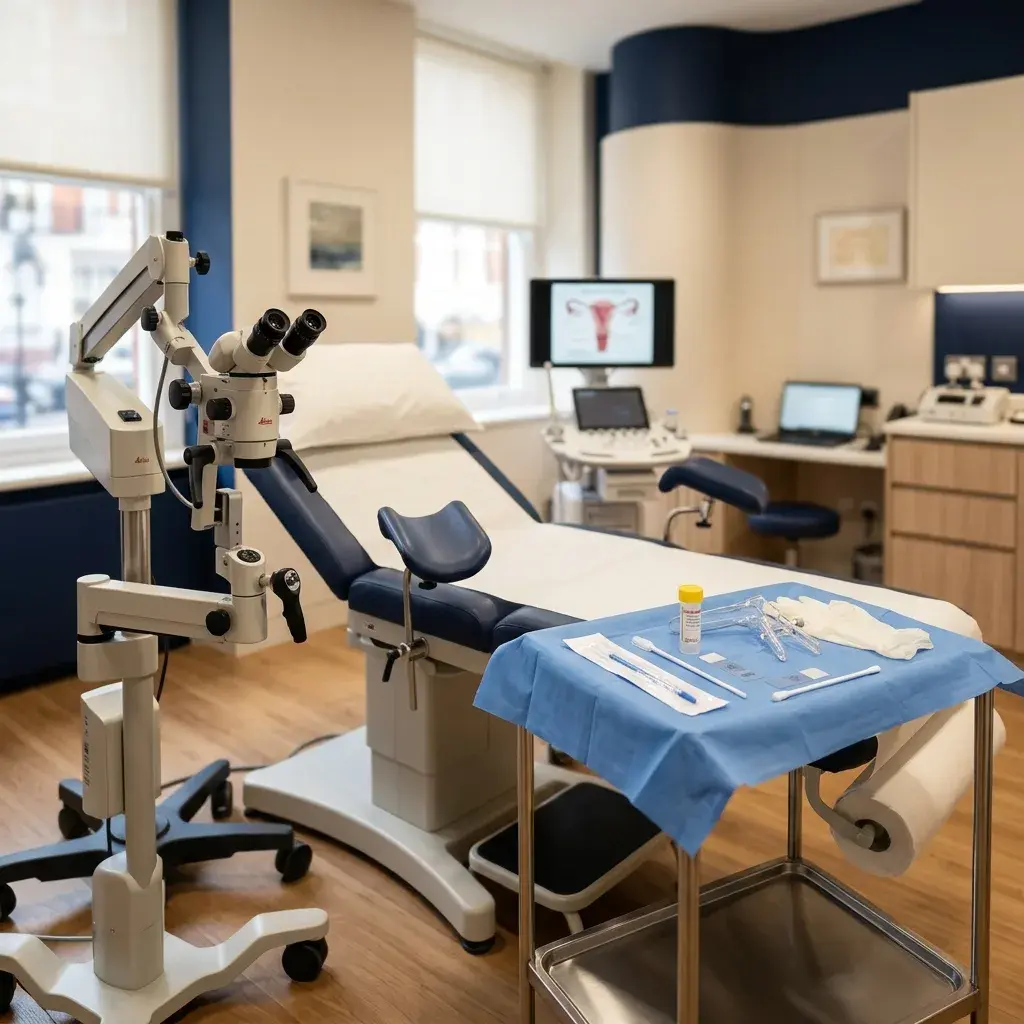
The procedure is completely painless and takes only 2–3 minutes. The gynecologist collects a sample of cells from the surface of the cervix (ecto- and endocervix) using a specialized brush or spatula. The sample is fixed on a glass slide and sent to a cytology laboratory for analysis.
- The patient is positioned in a gynecological examination chair
- The doctor inserts a speculum to visualize the cervix
- A gentle sweep collects cells from the cervix
- The sample is fixed and sent for microscopic analysis
- Results are available within 5–7 business days
When should you have a Pap smear?
A regular annual Pap test is recommended for all women aged 21 to 65. It is especially important if:
- You have not had a cervical cytology test for more than a year
- You have tested positive for HPV
- A previous Pap test showed abnormal cells
- You experience irregular bleeding or post-coital bleeding
- You are planning pregnancy — preconception screening
- You have undergone dysplasia treatment or conization
How to prepare for a Pap smear
- Schedule outside of menstruation — ideally days 10–20 of the cycle
- Avoid sexual intercourse 24–48 hours before the test
- Do not use vaginal preparations (creams, suppositories, douches) 48 hours prior
- No vaginal douching on the day of the test
- No special diet or lab work is required
Interpreting Pap smear results
Results are classified using two systems — the traditional Papanicolaou classification and the modern Bethesda system:
- Papanicolaou I (negative) — normal cells, no changes
- Papanicolaou II — inflammatory changes, usually due to infection → treatment + follow-up
- Papanicolaou III (dysplasia) — abnormal cells, requires colposcopy and possible biopsy
- Papanicolaou IV — suspected carcinoma in situ → urgent further diagnostics
- Papanicolaou V — malignant cytology → urgent oncological work-up
Under the Bethesda system, results are further categorized as:
- NILM — negative for intraepithelial lesion or malignancy
- ASC-US — atypical squamous cells of undetermined significance → HPV testing
- LSIL — low-grade squamous intraepithelial lesion (mild dysplasia, CIN I)
- HSIL — high-grade squamous intraepithelial lesion (moderate/severe dysplasia, CIN II–III)
- AGC — atypical glandular cells → requires further evaluation
What if the Pap smear is abnormal?
An abnormal Pap test does not mean cancer — most commonly it indicates inflammation or mild dysplasia that responds well to treatment. Depending on the findings, your gynecologist may recommend:
- Repeat Pap test in 3–6 months
- Colposcopy — magnified cervical examination with biopsy
- Conization — surgical removal of affected tissue
- HPV genotyping — identification of the specific HPV type
Read more:
Colposcopy — cervical examination
Gynecological examination
Cervical conization
HPV infection and condylomata

Performed by
Dr Đorđe Petković
Consultant in Operative & Endoscopic Gynaecology · 17+ years of experience
Patients often ask
No, the Pap smear is a completely painless procedure. The sample collection takes just a few seconds and requires no anesthesia.
An annual screening is recommended for all women aged 21 to 65. Women with risk factors (HPV positive, previous abnormal results) may need more frequent screening as advised by their gynecologist.
Cytology results are typically ready within 5–7 business days. At Palmotićeva, we contact you as soon as the report arrives from the laboratory.
Yes, the Pap test is safe during pregnancy and can be performed during routine gynecological check-ups. It is advisable to have one in the first trimester if not done in the past year.
An abnormal result most commonly indicates inflammation or mild dysplasia — not cancer. Your gynecologist will recommend a repeat Pap test or colposcopy for further evaluation.